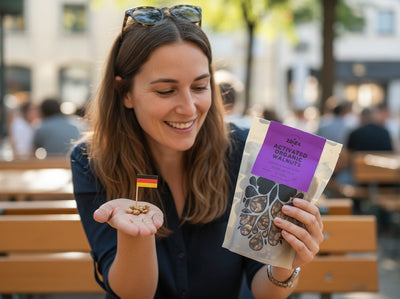


Every year, the German Federal Centre for Nutrition (BZfE) together with Nutrition Hub publishes the most important nutrition trends in Germany. In 2025, something stands out: almost all trends point in the same direction — back to real, nutrient-dense, digestible foods. And there is one food that addresses a remarkable number of these trends simultaneously.
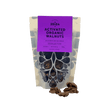
Activated nuts are organic nuts that have been soaked in spring water and then slowly dried at temperatures below 65°C over several days. This two-step process — inspired by traditional preparation methods of indigenous cultures — reduces anti-nutrients such as phytic acid and enzyme inhibitors and increases the bioavailability of minerals like zinc, iron, and magnesium. In Germany, 2DiE4 Live Foods at Gut Mooseurach in Upper Bavaria is the only producer offering this process in certified organic quality and by hand.
“9 out of 10 food trends.
One food.”
1 Plant-based and flexitarian eating
The shift away from daily meat towards more plant-based proteins is no longer a fad — it’s mainstream. Flexitarian doesn’t mean vegan, but mindful: less animal protein, more plant diversity. According to the Nutrition Trend Report 2025, plant-based eating is the strongest and most stable trend in Germany.
The German Nutrition Society (DGE) updated its dietary guidelines in 2024, increasing the recommended share of plant-based foods. Nuts are explicitly recommended as a daily food group — at least 25g per day.
Nuts deliver: High-quality plant protein (cashews: 18g/100g, almonds: 21g/100g), essential amino acids, and healthy fats — without factory farming, without antibiotics, without the carbon footprint of a steak. A handful of nuts won’t replace a steak — but they perfectly complement any plant-forward meal.
2 Personalised nutrition
CGM sensors, gut microbiome tests, wearables — more and more people are optimising their diet based on individual data. Programs like ZOE and Levels show: what works for one person can cause blood sugar spikes in another. Nutrition is becoming personal, data-driven, individual.
Nuts deliver: A universally blood-sugar-stabilising effect. According to a study by Shukla et al. (2015, Diabetes Care), consuming protein and fat before carbohydrates reduces postprandial blood sugar spikes by up to 29%. Nuts — with their high fat and protein content — serve as a simple “starter” before carb-heavy meals. Regardless of your individual metabolic profile. More on this: How to hack your ZOE score.
3 Sustainable and climate-friendly eating
The Planetary Health Diet by the EAT-Lancet Commission recommends: more nuts, legumes, and whole grains, less meat and sugar. Nuts have a comparatively small ecological footprint — especially when organically grown and fairly traded.
4 Functional nutrition
Food should not just fill you up — it should function. Nutrient density over empty calories. Foods that measurably contribute to health — not just curb hunger, but nourish the body. The difference from supplements: functional foods deliver nutrients in their natural matrix — bound to fibre, fats, and cofactors that improve absorption.
This is precisely where activated nuts have an advantage over isolated dietary supplements: the nutrients come not from a capsule, but from a whole food — and through activation, the bioavailability of those nutrients is additionally increased. More on this: Activated nuts vs. supplements.
Nuts deliver: One of the highest nutrient densities of any food. 30g of brazil nuts cover the entire daily requirement for selenium. 30g of almonds provide 37% of the daily need for vitamin E. Cashews are one of the best plant-based sources of magnesium (83mg per 30g). That is functional nutrition — in a handful.
5 Nutrition for the gut
The gut microbiome is the health topic of recent years. Fermented foods, prebiotics, probiotics — everything revolves around the gut-brain axis and the realisation that health begins in the gut. A Stanford University study (Wastyk et al., 2021, Cell) confirmed: fermented foods increase microbial diversity in the gut significantly — more so than a purely high-fibre diet.
6 Blood-sugar-friendly eating
“Glucose Revolution” by Jessie Inchauspé, CGM data, the ZOE hype — blood sugar is the new calorie counting. The central insight: it’s not what you eat that matters, but in what order. Fat and protein before carbohydrates — this slows gastric emptying and dampens the glucose response.
Nuts deliver: The simplest blood sugar hack. 15 minutes before eating, a handful — measurable effect. Shukla et al. (2015, Diabetes Care) showed: the order of food intake has a stronger effect on blood sugar than portion size. We covered this in depth: How to hack your ZOE score.
7 Alcohol-free and low-alcohol
“Sober Curious” and the trend towards alcohol-free alternatives are growing rapidly. According to surveys, 40% of 18- to 29-year-olds now drink less or no alcohol at all. Those who drink less snack more mindfully — and seek alternatives that enhance the evening without burdening the body. No empty stomach, no salty crisps, no sugar crash.
Nuts deliver: The perfect companion for an alcohol-free evening. Tamari almonds with umami flavour instead of salty snacks. Cayenne tamari almonds for those who like it spicy. Mindful enjoyment that satisfies rather than empties — and leaves no regrets the next morning.
8 “Terrapy” — natural eating
Back to basics. Eating food the way nature intended — minimally processed, without additives, without industrial modification. The term “Terrapy” combines “Terra” (earth) with “Therapy” — healing through natural food. The NOVA score, which classifies foods by degree of processing, is increasingly becoming the compass: NOVA 1 (unprocessed) rather than NOVA 4 (ultra-processed).
Activated nuts are Terrapy: one food, two ingredients (nuts + water), a centuries-old process. NOVA score: 1.
No flavourings, no preservatives, no tricks. Farm. Activation. To you. Nothing in between. The ingredient list on every 2DiE4 pack is rarely longer than two lines.
9 Mindful snacking
The classic snack — chocolate bars, crisps, biscuits — is under pressure. In Germany, over 50% of daily calories come from ultra-processed foods (NOVA 4). People want to snack, but not with empty calories. They seek snacks that are nutrient-dense, satiating, and clean.
An analysis in the British Medical Journal (Lane et al., 2024) found a link between ultra-processed snack consumption and increased risk for 32 health conditions, including heart disease, diabetes, and depression. Switching to unprocessed snacks like nuts is not just a lifestyle choice — it’s a health decision.
Nuts deliver: The prototype of the smart snack. Portionable, shelf-stable, nutrient-dense, satiating. No fridge needed, no preparation. A bag of nut mix in your pocket — and you have the best snack there is. Explore all varieties.
10 Mindfulness and nutritional literacy
Eating consciously instead of consuming mindlessly. Understanding what you eat and why. This trend shows: people don’t just want to eat healthily — they want to understand why it’s healthy. Nutritional education is moving from niche to mainstream. Apps like Yazio, MyFitnessPal, and the 2DiE4 Nutri Calculator help make nutrient intake visible and understandable.
Activated nuts tell a story: The activation process is a story worth telling. Why soak? What does phytic acid do? Why dry below 65°C? This knowledge turns a snack into a conscious choice — and a consumer into an informed eater.
The pattern behind the trends
When you lay the 10 trends side by side, a clear pattern emerges. An important note: the trend report doesn’t show how Germany actually eats, but which nutrition trends 199 experts consider relevant. It describes the direction in which nutrition is moving culturally and socially. Reality often looks different: actual consumption falls well short of recommendations for vegetables, legumes, nuts, whole grains, and plant oils, while sugar and meat remain too high.
- → Away from ultra-processed foods — towards real, recognisable ingredients
- → Away from empty calories — towards nutrient density and functional nutrition
- → Away from treating symptoms — towards prevention through real food
- → Away from dogma — towards individual, data-driven optimisation
Activated nuts are not a trend product. They are an answer to almost all trends at once — because they do what good food has always done: deliver real nutrients in a form the body can actually use.
Overview: 2025 food trends and activated nuts
| Trend | Relevance | Key nutrient |
|---|---|---|
| Plant-based eating | High — 18-21g protein/100g | Plant protein |
| Personalised nutrition | High — universal blood sugar effect | Fat + protein |
| Sustainability | High — organic, smallholder | — |
| Functional nutrition | Very high — extreme nutrient density | Selenium, vitamin E, magnesium |
| Gut health | Very high — fermentation reduces phytic acid | Prebiotic fibre |
| Blood sugar | High — reduces glucose spikes by up to 29% | Fat + protein before carbs |
| Alcohol-free | Moderate — mindful snack alternative | Tamari umami |
| Terrapy | Very high — 2 ingredients, NOVA 1 | — |
| Mindful snacking | Very high — nutrient-dense, portionable | All |
| Nutritional literacy | High — story-worthy process | — |
Frequently asked questions
Q: Is there really one food that addresses all trends?
Not all equally — but 9 out of 10 in a meaningful way. This is because nuts are naturally nutrient-dense, plant-based, rich in fibre, and versatile. Activation adds gut-friendliness and bioavailability.
Q: What sets activated nuts apart from regular organic nuts?
Activated nuts are soaked in spring water and dried at below 65°C over several days. This process breaks down phytic acid and enzyme inhibitors, improves digestibility, and increases the bioavailability of minerals such as zinc, iron, and magnesium. Regular organic nuts are high quality, but the anti-nutrients remain intact.
Q: Which nut suits which trend?
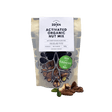
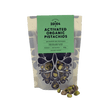
Walnuts for omega-3 and brain health, cashews for magnesium and sleep, almonds for vitamin E and blood sugar, pistachios for lutein and eye health, brazil nuts for selenium and thyroid. Our nut mix covers the widest range.
Disclosure: As a producer of activated nuts, we write from a biased perspective — but all cited sources are independent, peer-reviewed, and publicly accessible.
Sources & further reading:
- German Federal Centre for Nutrition / Nutrition Hub (2025): Nutrition Trend Report 2025
- EAT-Lancet Commission (2019): Food in the Anthropocene — the Planetary Health Diet. The Lancet, 393(10170), 447-492
- Shukla, A.P. et al. (2015): Food Order Has a Significant Impact on Postprandial Glucose. Diabetes Care, 38(7), e98-e99
- Wastyk, H.C. et al. (2021): Gut-microbiota-targeted diets modulate human immune status. Cell, 184(16), 4137-4153
- Lane, M.M. et al. (2024): Ultra-processed food exposure and adverse health outcomes. BMJ, 384, e077310
- Inchauspé, J. (2022): Glucose Revolution. Short Books Ltd.
About the author
Filip Good is co-founder of 2DiE4 Live Foods and has been working with fermented and activated foods for over 10 years. Together with Agni Thalgott, he runs the nut manufactory at Gut Mooseurach in Koenigsdorf, Bavaria. Meet the team