



300+
enzymatic reactions
26%
of people in Germany are deficient
83 mg
per handful of cashews
I will be honest: when Agni and I introduced cashews into our 2DiE4 product portfolio, magnesium was not the first thing we thought about. Taste was. That creamy, slightly sweet note that becomes even more intense after activation. But when you take a closer look at the nutritional profile of cashews, or analyse them with our "Nut Nutri Researcher", you understand why I reach for cashews in the evening instead of magnesium tablets.
The deficiency no one feels.
Until it is too late.
THE PROBLEM
According to the National Nutrition Survey II by the Max Rubner Institute, 26% of men and 29% of women in Germany do not reach the recommended magnesium intake. Among young adults, the deficiency rate is even above 40%.
That is what makes it so deceptive: magnesium deficiency does not show up with one clear signal. It creeps in. The symptoms are non-specific and are almost always misattributed:
- Muscle cramps at night? "Probably not enough water."
- Sleep problems? "Probably too much screen time."
- Inner restlessness? "Just stress."
- Headaches? "Drink more water."
Maybe it is the screen. Maybe it is stress. But maybe it is simply magnesium. And blood tests at the doctor often do not help much: only 1% of the body's magnesium is found in the blood. The rest sits in bones and cells. You can have a serious deficiency and still show normal bloodwork.
Why is the deficiency so widespread? Three reasons:
- Depleted soils provide fewer minerals than they did 50 years ago
- Ultra-processed foods (more than 50% of calories in Germany) lose up to 80% of their magnesium during processing
- Stress, coffee, alcohol increase demand even further
What magnesium does in your body. And what happens when it is missing.
SCIENCE
Magnesium is not a luxury. It is the conductor of an orchestra of more than 300 enzymes:
Muscles
A natural antagonist of calcium. It releases contractions. Without magnesium, the muscle stays tense. Cramps, tension, restless legs.
Sleep
It regulates GABA receptors, the body's most important calming neurotransmitter. 500 mg per day significantly improved sleep quality and melatonin secretion (Abbasi et al., 2012).
Stress
It dampens cortisol release. Chronic stress uses up magnesium, and low magnesium amplifies stress. A vicious cycle that cashews can help break.
Blood sugar
It improves insulin sensitivity. Magnesium deficiency increases the risk of type 2 diabetes by 33%. Relevant for our diabetes guide.
On top of that, magnesium is cardioprotective. It stabilises heart rhythm and relaxes vascular muscles. In Nut Knowledge #1, we showed how cashews play a role in heart health research. Magnesium is one of the reasons why.
Cashews vs. magnesium tablets:
Why the nut wins
THE COMPARISON
The surprise: even though a magnesium tablet contains more magnesium on paper, your body ends up receiving a similar amount. Because the magnesium in cashews is embedded in a food matrix of fat, protein, and fibre that slows and improves absorption.
And then there is what the tablet does not have: tryptophan. 30 g of cashews provide around 70 mg of this amino acid, the direct precursor of serotonin, the "feel-good hormone", and melatonin, the sleep hormone. Combined with magnesium, which supports the conversion into serotonin, it creates a natural mood and sleep booster. No supplement delivers this combination.
The phytic acid blocker.
And why activation removes it.
THE CATCH
Here is the irony: you eat cashews for their magnesium, but the phytic acid in raw cashews binds part of it in the gut. Studies estimate that phytic acid reduces magnesium absorption by 20-40%. You pay for nutrients you never actually get.
What our activation changes
It took us two years before we sold our first product. Agni searched for the right farmers, tested soaking times, varied salt concentrations. Our spring water comes from the farm, the sea salt from Brittany and Croatia. The ovens are custom-made, now already in their fourth version.
The result for cashews: phytic acid reduced by up to 60%. Instead of 50-55 mg of usable magnesium from 30 g of raw cashews, you get 65-75 mg from activated ones. 15-25% more. From the same handful.
More on the mechanism: Phytic acid: friend or foe?
My evening ritual.
For the last three years.
PRACTICE
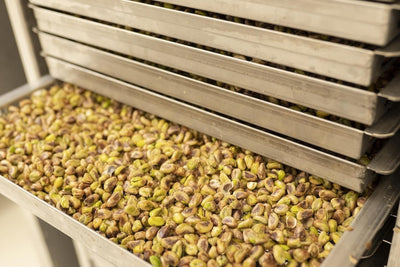
8 p.m. A handful of activated cashews. Sometimes with a few pistachios (they contain more melatonin than any other food). The magnesium relaxes the muscles, the tryptophan supports melatonin production, and the fats satisfy gently without weighing you down.
Not a study. My own experience. But it matches what Abbasi et al. (2012) showed in their randomised study: magnesium supplementation significantly improved sleep quality, sleep onset time, and serum melatonin in older adults.
In the podcast, Agni talks about her nut phases: "I always go through these periods. Sometimes only pistachios, then almonds, then suddenly pumpkin seeds. I listen to my body." My body has been saying the same thing for three years: cashews. In the evening. Every day.
Who cashews are especially important for
TARGET GROUPS
Athletes: Magnesium is lost through sweat. Demand rises by 10-20% under intense physical load. In the podcast, we talk about Laura, an athlete testing our nuts: "She says it is a game changer. She can finally digest them and feels more consistent energy." Cashews provide magnesium plus 18 g of protein per 100 g for recovery.
Stressed people: Cortisol increases magnesium use. Tryptophan from cashews lowers cortisol. Together, the two help break the vicious cycle.
Vegans: Plant-based magnesium is often bound to phytic acid. Activated cashews solve this problem directly. They also provide iron (2 mg/30 g) and zinc, both critical in vegan diets.
Pregnant women: Magnesium needs are 20-30% higher. Cashews also provide iron and folate.
Older adults: Magnesium absorption declines with age. Activated cashews with reduced phytic acid partly compensate for this effect.
A handful of cashews in the evening. Magnesium, tryptophan, calm. Sleep really can be that simple.
10 Questions and Answers
NUT KNOWLEDGE
1. How many cashews per day for enough magnesium?
30 g (around 10 pieces) provide 83 mg of magnesium, 22% of the daily requirement. Two handfuls cover almost half. Combined with whole grains and leafy greens, you can meet your daily requirement without supplements.
2. Why do cashews work better than magnesium tablets?
Magnesium oxide has a bioavailability of only 4-15%. Magnesium from cashews is embedded in a matrix of fat and protein that slows and improves absorption. Plus, cashews also provide tryptophan, zinc, and iron. The tablet provides only magnesium.
3. Do cashews really help you fall asleep?
Yes, in two ways: magnesium regulates GABA receptors (calming), and tryptophan is converted into melatonin (the sleep hormone). The effect is gentler than supplements, but more sustainable. A randomised study (Abbasi 2012) confirms the connection between magnesium and sleep.
4. What is tryptophan, and why is it in cashews?
Tryptophan is an essential amino acid and the direct precursor of serotonin and melatonin. 30 g of cashews provide around 70 mg. Combined with magnesium, which supports the conversion, it creates a natural mood and sleep booster.
5. Why are so many people in Germany deficient in magnesium?
Depleted soils, ultra-processed foods (which lose 80% of their magnesium), and increased demand due to stress, coffee, and alcohol. According to the National Nutrition Survey, 26-29% of adults and more than 40% of young adults are deficient.
6. What exactly does phytic acid block?
Phytic acid binds divalent cations in the gut: magnesium, zinc, iron, calcium. These complexes cannot be absorbed and are excreted. Activation reduces phytic acid by up to 60%. More in Nut Knowledge #6.
7. Cashews for diabetes: a good idea?
Yes. Magnesium improves insulin sensitivity, and magnesium deficiency increases the risk of type 2 diabetes by 33%. Cashews have a low GI (25). Our diabetes article shows the details.
8. Are cashews good for athletes?
Absolutely. Magnesium is lost through sweat, and demand increases by 10-20%. Cashews also provide 18 g of protein per 100 g for recovery. In the podcast, we talk about athlete Laura, who says activated nuts are a "game changer" for her.
9. How do I store activated cashews?
Store them in a cool, dry place away from direct sunlight. Consume opened packs within 4-6 weeks. Thanks to their low moisture content after activation, they keep longer than raw cashews.
10. Where can I get cashews together with all the other varieties?
The 2DiE4 ALL-IN-ONE Set contains 100 g of activated organic cashews plus 6 other varieties. 49,90 € instead of 64,30 € (22% off). Free shipping in DE/AT. From Gut Mooseurach in Bavaria straight to you.
Continue with the Nut Knowledge series:
Sources:
- Max Rubner Institute (2008): National Nutrition Survey II - Mineral supply in Germany
- Abbasi, B. et al. (2012): Effect of magnesium supplementation on insomnia in elderly subjects. JRMS, 17(12)
- Dong, J.Y. et al. (2011): Magnesium intake and risk of type 2 diabetes. Diabetes Care, 34(9)
- Lönnerdal, B. (2002): Phytic acid-trace element interactions. IJFST, 37(7)
- Real Food Rebels Podcast (2025): Filip Good & Agni Thalgott, Katana Studio